Rot
-
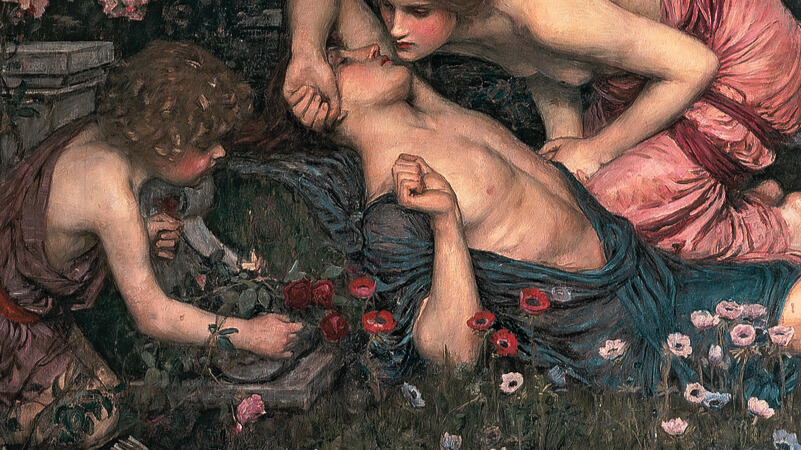
Every summer in ancient Athens, strange gardens emerged in courtyards and on rooftops. Seedlings were precariously sown into handfuls of soil within clusters of broken pottery. These impromptu micro gardens were lovingly tended for several weeks, yet they were created to be infertile and die. Long before they could bear fruit, the seedlings would wither…
-

If corrupt smells are a sign of a corrupt nature, what happens when a holy person dies? It is in this Western mind-body dualism that the concept of the Odour of Sanctity is born.
-

Richard I of England was blessed with a great head of hair and a great nickname, Cœur de Lion, Lionheart. He was also the great-great-grandson of William the Conqueror. Born into the Plantagenet-Angevin royal family, he inherited immense wealth and privilege even if his parents were the dysfunctional Henry II and Eleanor of Aquitaine. Richard…
-

This post is part of the Scented History of the Plague series. If you are not familiar with the history of the plague in Europe, you may want to pop over to our primer first. In this post, we’re discussing the rise of Miasma Theory during the Second Pandemic and how it impacted European olfactive…
-

Over the last year I have had several requests for more information and deeper reads on subjects brought up on the blog. So after banging around my shelves a bit, here is the Death/Scent reading list. Some of them are staples of both olfactive and death literature, others are weird and wonderful deep cuts. This…
-

When I was a teenager I pretended that I didn’t like flowers, “They’re the genitals of plants why would I want those as a gift, gross!” I made a huge show about telling everyone how much I hated them. Clubs in my school routinely sold flowers for fundraisers. While the idea is nice, in the…
-

This is Part II of our two-part look at Famadihana. Read Part I here While forces have been at work for some time trying to kill the lively and joyous practice of Famadihana, they have done little to dampen the practice in the highlands; what may prove the death nail, however, is the pneumonic plague. All of…
-

What do fleshy tuberose, cooked Brussel sprouts, chocolate, the musk of human sex, faeces, and a decomposing body all have in common? Indole, dirty, sexy, carnal Indole. You have smelled it thousands of times without knowing its name, but if you are smelling something a little bit overripe, heavy, and with a strange sweetness, it…

This work is licensed under a Creative Commons Attribution-NonCommercial-No Derivatives 4.0 International License. Copyright © Death/Scent part of Atropos Parfums, 2015-2026.
 Death Scent